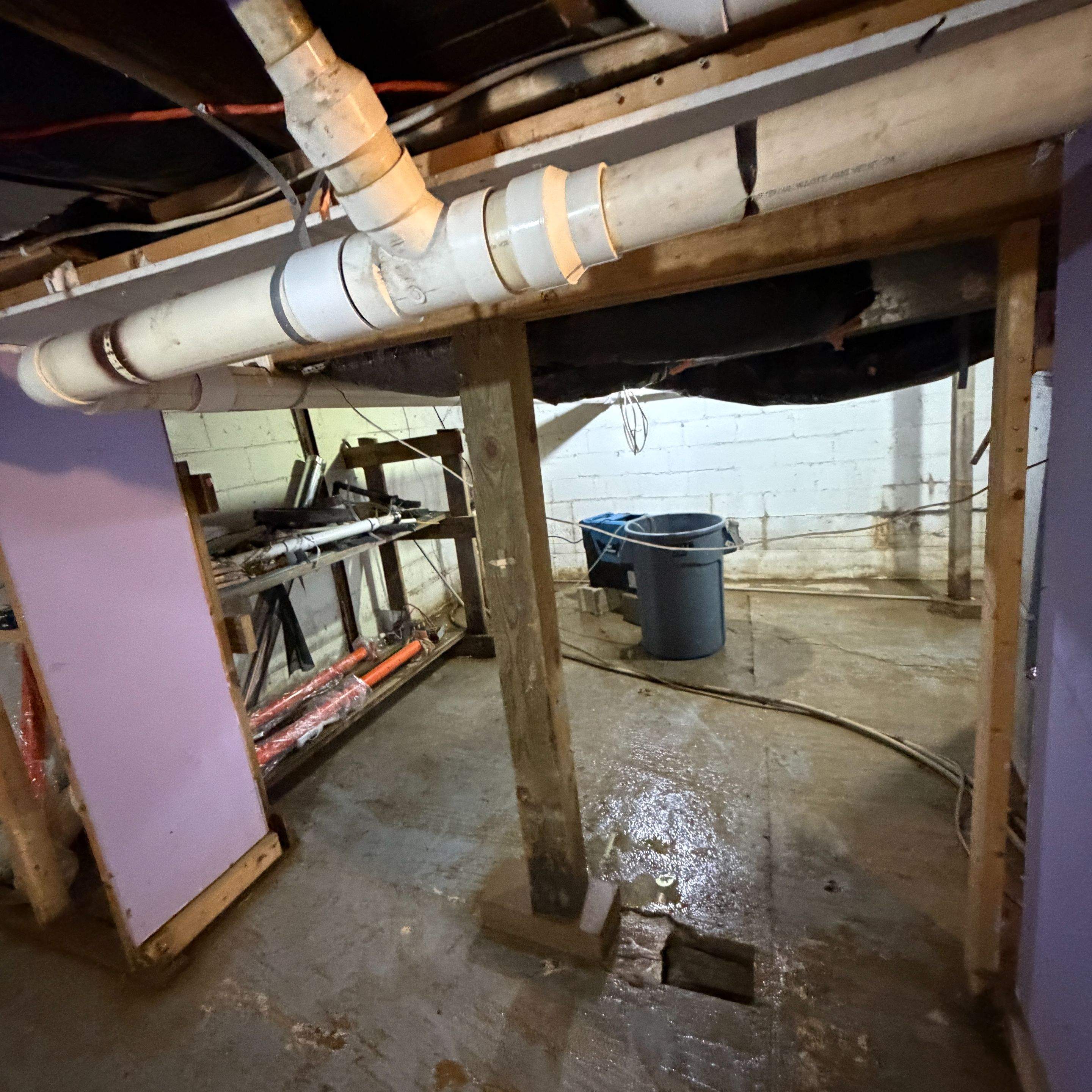
Quick Answer: Commercial Water Damage Restoration in Crawfordsville
Commercial water damage restoration is the IICRC S500 process of extracting water, drying structure and contents, sanitizing affected areas, and documenting the loss for your insurance carrier. For most Crawfordsville businesses, response should happen within 60 to 90 minutes, full extraction within 4 to 8 hours, and structural drying within 3 to 5 days. Costs typically run from $3 per square foot for clean water on small footprints to $15+ per square foot for category 3 contamination across multiple floors.
Response Timeline: What Should Happen and When
The First 24 Hours
- 0 to 60 minutes: Call placed, crew dispatched, water source identified and shut off
- 1 to 2 hours: Arrival on site, safety assessment, power isolation if needed
- 2 to 4 hours: Extraction begins with truck-mounted units pulling 100+ gallons per hour
- 4 to 8 hours: Content manipulation, pad removal, antimicrobial application
- 8 to 24 hours: Air movers and dehumidifiers placed, moisture map documented
Days 2 Through 5
- Daily moisture readings logged with thermo-hygrometers and penetrating meters
- Equipment adjusted based on drying progress
- Selective demolition of unsalvageable materials
- Daily reports sent to you and your adjuster
Days 5 Through 10 (When Applicable)
- Final moisture verification against dry standard set during initial inspection
- Equipment demobilization and post-mitigation walkthrough
- Handoff to reconstruction team with scope already documented
- Final invoice package assembled with all readings, photos, and Xactimate sketch
Realistic Cost Ranges in Crawfordsville
| Loss Size | Category 1 | Category 2 | Category 3 |
|---|---|---|---|
| Under 1,000 sq ft | $2,500 to $7,500 | $5,000 to $12,000 | $10,000 to $25,000 |
| 1,000 to 5,000 sq ft | $7,500 to $25,000 | $15,000 to $45,000 | $30,000 to $90,000 |
| 5,000 to 15,000 sq ft | $20,000 to $75,000 | $40,000 to $125,000 | $80,000 to $250,000+ |
These numbers reflect typical Crawfordsville commercial losses and do not include reconstruction, contents restoration, or business interruption. Most commercial policies cover mitigation in full when properly documented. Our team handles the paperwork side of commercial water restoration directly with your adjuster so you can focus on reopening.
Documentation Your Insurance Carrier Will Demand
What We Capture On Site
- Photo and video of every affected room before any work begins
- Moisture maps showing readings room by room
- Daily drying logs with timestamps and instrument readings
- Equipment placement diagrams
- Itemized scope of work tied to Xactimate line items
- Chain of custody for any removed materials
- Thermal imaging captures showing hidden moisture behind walls and under flooring
What You Should Gather
- Policy number, agent contact, and claim number once filed
- Inventory of damaged equipment, stock, and furniture with purchase dates
- Revenue records from the prior 12 months for business interruption claims
- Lease language if you are a tenant (landlord may share responsibility)
- Any maintenance records on the failed system
- Employee payroll records if continuing operations claims apply
Business Continuity Steps to Take During Mitigation
- Isolate the affected zone: Plastic containment and signage allow unaffected areas to keep operating
- Relocate critical inventory: Move stock, files, and electronics to climate-controlled staging
- Notify stakeholders: Customers, vendors, and employees need clear updates on access and hours
- Capture lost revenue daily: Document each day of partial or full closure for the interruption claim
- Plan a phased reopening: Restore revenue-generating areas first, back-of-house second
Most Crawfordsville businesses we work with stay partially operational throughout mitigation when containment is planned correctly. A restaurant may close its dining room but keep the kitchen running for delivery, or a retailer may section off one aisle while the rest of the floor stays open.
Industries We Work In Across Crawfordsville
- Retail storefronts and shopping centers
- Restaurants, bars, and food service
- Medical and dental offices
- Warehouses and light industrial
- Hotels and short-term rentals
- Office buildings, single and multi-tenant
- Schools, churches, and nonprofits
- Auto dealerships and service centers
- Property management portfolios and HOA common areas
- Fitness centers, salons, and personal service businesses
IICRC Water Categories and What They Mean for Your Business
| Category | Source | Typical Commercial Examples | Restoration Approach |
|---|---|---|---|
| Cat 1 (Clean) | Supply line, sink overflow | Burst copper line, broken fixture | Extract, dry in place where possible |
| Cat 2 (Gray) | Dishwasher, washing machine, aquarium | Restaurant equipment failure, hotel laundry | Extract, controlled demo, antimicrobial |
| Cat 3 (Black) | Sewage, flood water, standing water over 48 hrs | Toilet backup, parking lot flood entry | Full removal of porous materials, decontamination |
Time changes category. A Cat 1 supply line break becomes Cat 2 after 24 hours and Cat 3 after 48 to 72 hours, which is why speed matters. For sewage and contaminated losses, see our commercial sewage cleanup process for the full decontamination protocol.
Equipment Footprint for Commercial Losses
- Air movers: 1 per 50 to 60 linear feet of wet wall, plus 1 per 150 sq ft of wet floor
- Dehumidifiers: LGR or desiccant units sized to the cubic footage and load
- Air scrubbers: HEPA filtration for Cat 2 and Cat 3 environments
- Negative air machines: Required for containment zones during demolition
- Generators: Common on Crawfordsville losses when power is compromised
- Desiccant trailers: Deployed on losses above 10,000 sq ft or with low ambient temperatures
- Hardwood drying mats: Used on engineered and solid wood floors to pull moisture without demo
A 10,000 sq ft office with 30% saturation typically needs 40 to 60 air movers and 4 to 8 large dehumidifiers running 24/7. Smaller crews and undersized equipment will leave moisture behind, which is the number one cause of secondary commercial mold growth after a water loss. Crawfordsville Water Restoration sizes every job against IICRC psychrometric calculations rather than guesswork, so the equipment load matches the actual evaporation demand.